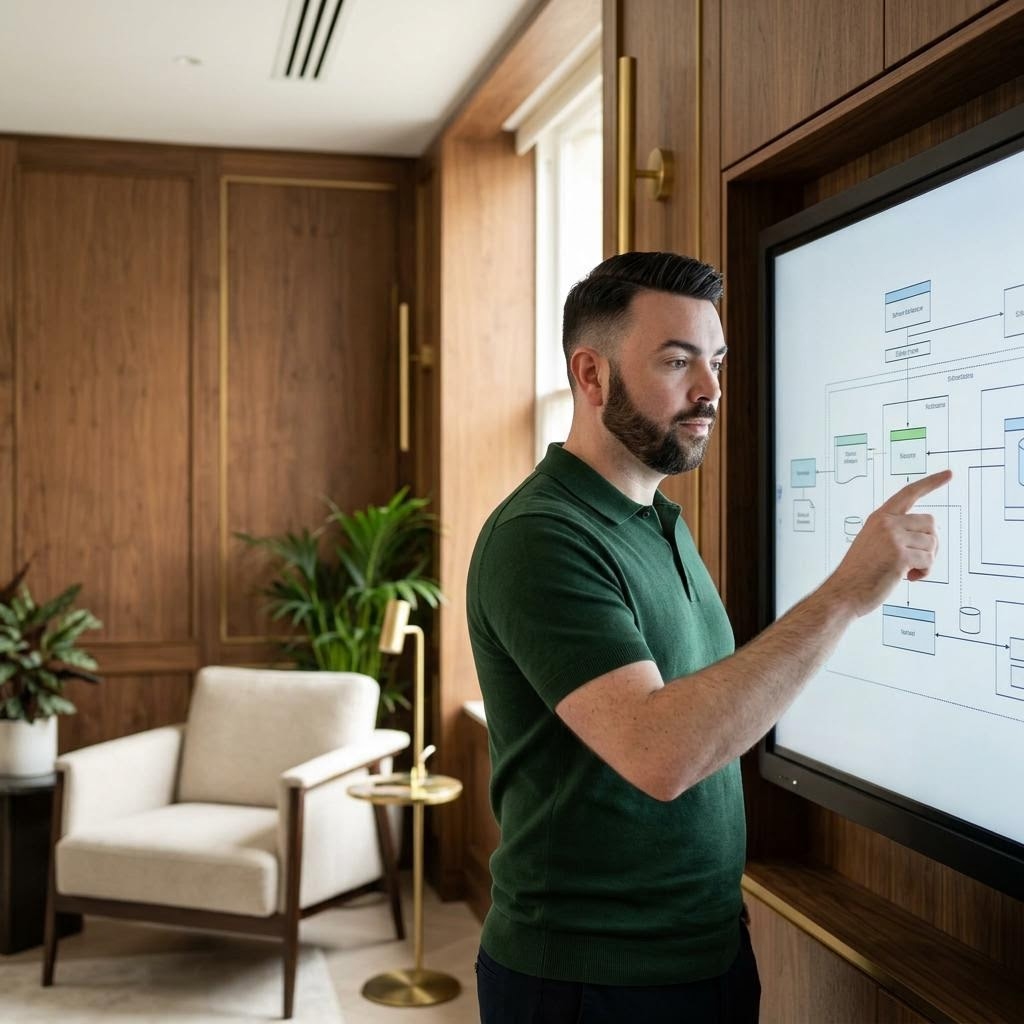
AI assisted editorial depiction of John P. Cronin reviewing software architecture
Development Directory

Ventures and Experiments

A view into how I test ideas before treating them as operating answers. When technology changes a market, the costly mistake can be building quickly without first deciding what is worth building.
The Lab

Platforms built to test a thesis in the market.

Each project explores where AI and emerging technology might create leverage. A thesis becomes more useful when it meets the constraints of a real product.
03AI Data and Discovery
Status: Building

WhoEngine

Thesis and Focus

A technology platform exploring new ways for businesses to identify, understand, and reach the right companies and people using artificial intelligence and data.

In short

Websites and platforms are cheaper to build than ever. That makes the harder questions more valuable: what should this platform do for the business, who is it really for, and how will we know it works? The ventures above are where those questions get tested in the market.

The Cost of Inaction

Built well. Not built for the business.

The website was redesigned recently, but the phone does not ring any differently.
What it costsBudget went to appearance rather than to the job the site needs to do: earning trust and converting the right visitors.
The platform has features nobody asked for and lacks the one customers need.
What it costsDevelopment time is spent on internal opinions instead of evidence from real users.
The site is disconnected from the CRM and the rest of the revenue system.
What it costsInquiries arrive without context, follow up is slow, and nobody can tie the site to revenue.
A new product idea has been discussed for months without being tested.
What it costsThe window of opportunity narrows while the team debates what could be learned in weeks.
Content is published, but it does not answer the questions buyers actually ask.
What it costsSearch engines and AI assistants surface competitors instead, and credibility is lost before the first conversation.
What should change

The benefits, in plain English.

These are intended outcomes, not promises. What changes depends on your starting point, your team's decisions, and how the work is carried through.

A platform with a clear job to do.

A defined purpose, audience, and outcome for the site or product before design and development begin.

Evidence before scale

Ideas are tested quickly in the market, and only what earns traction receives more investment.

Connected to revenue

The site or platform feeds the CRM and revenue system, so its contribution can be seen.

Answers buyers can find

Content structured to answer real questions clearly, for people, search engines, and AI assistants.

Smarter build decisions

Clear reasoning about what to build, what to buy, and what to leave out.

The diagnosis

What gets decided before a line of code.

What is the thesis this platform is testing?

Every build starts from a stated market thesis: what shift it responds to and what would prove it right or wrong.

Who is it for, and what must they be able to do?

We define the few actions that matter for the primary audience and design around those.

Build, buy, or assemble?

With software becoming abundant, custom build is reserved for what is distinctive; the rest is assembled from proven platforms.

What is the smallest version worth launching?

We scope a version that can generate real evidence quickly rather than a finished product nobody has tested.

How does it connect to the rest of the business?

Inquiries, data, and customer signals flow into the CRM and revenue system from the start.

What an engagement can deliver

From thesis to a working platform.

The right scope depends on the decision in front of you. Outputs are agreed before work begins and can include:

  • A platform thesis and brief naming the audience, the job, and the evidence that would prove it works.
  • A build, buy, or assemble recommendation with reasoning for each component.
  • A launch scope for the smallest version capable of producing useful evidence.
  • An integration outline connecting the site or platform to CRM, data, and analytics.
  • An answer led content structure built around the questions buyers genuinely ask.
How the work moves
  1. Thesis

    Name the market shift and what the platform must prove.

  2. Scope

    Define the audience, core actions, and smallest useful launch.

  3. Build and test

    Launch quickly, observe real behavior, and keep what compounds.

  4. Graduate or stop

    Scale what earns traction; turn the rest into lessons for the next thesis.

Who this is for

Leaders who want a platform that proves something.

  • Founders with a product or platform idea they want tested before committing heavily.
  • Established businesses whose website looks fine but does not produce inquiries.
  • Leadership teams deciding whether to build custom software or assemble existing platforms.
  • Companies whose site is disconnected from their CRM and revenue reporting.

Probably not the right fit if

  • You need a purely visual refresh with no change in purpose.
  • The project is already fully specified and only needs production capacity.
Hypothetical illustration
Suppose a specialist equipment supplier wants a customer portal. The internal wish list runs to dozens of features and a long build timeline.
How the work might respondThe work would identify the two or three actions customers most need, such as reordering and tracking, launch those on an assembled platform connected to the CRM, watch how customers actually use it, and decide the next investment on that evidence.
How you will know

A platform is working when behavior changes.

  • Qualified inquiriesThe right visitors take the actions the platform was designed for.
  • Time to evidenceHow quickly a launch produces real user behavior to learn from.
  • Revenue visibilityPlatform activity traced into the CRM and pipeline.
  • FindabilityBuyers reach clear answers to their questions through search and AI assistants.
  • Build disciplineCustom development limited to what is genuinely distinctive.
Explore the fit

Build the platform your business actually needs.

Tell me about the website, product, or platform you are considering, and what it needs to prove. We can discuss the right scope and whether to build, buy, or assemble.

How to read this portfolio

These are venture and product descriptions, not client case studies. A project thesis or building status does not establish commercial adoption, revenue, or a measured client result. Editorial imagery illustrates the ideas and is not evidence of a customer engagement. Where available, the linked product documentation provides the next level of detail.

Method

Test fast. Keep what compounds.

Rapid testing turns a market hunch into evidence. The ventures that survive graduate into operating companies; the rest become lessons that sharpen the next thesis.

Read the Principles
AI assisted editorial depiction of John P. Cronin discussing projects
Questions

Websites and platforms: frequently asked questions

01

Do you build websites and platforms for other companies?

John focuses on the strategic side: defining what a website or platform must do, who it serves, what to build versus buy, and how it connects to revenue. Implementation of websites and connected revenue systems can be carried out through Proven ROI.
02

What are the ventures and experiments on this page?

They are platforms in development, each built to test a specific thesis about where artificial intelligence and emerging technology create real leverage. The ones that earn traction can graduate into operating companies; the rest inform the next thesis.
03

Should we build custom software or use existing platforms?

As software becomes cheaper to build, custom development is best reserved for what is genuinely distinctive to the business. Everything else can usually be assembled from proven platforms, which is faster to launch and easier to change.
04

Why is our redesigned website not producing more inquiries?

Often because the redesign improved appearance without defining the job the site must do: which audience it serves, which actions matter, and which questions it must answer. A site also needs to connect to the CRM so inquiries arrive with context and can be traced to revenue.
05

How quickly should a new platform idea be tested?

As quickly as a version exists that can produce real evidence. The aim is to launch the smallest useful scope, observe genuine user behavior, and let that evidence decide further investment rather than internal opinion.
06

How does a website fit into AI revenue infrastructure?

Websites are part of the business infrastructure layer. When connected to CRM, customer data, and analytics, a site becomes a measurable source of pipeline rather than a standalone brochure.
Explore Working Together

Make the next move count.

Tell John what growth opportunity, operating problem, or investment decision is in front of you. Together you can assess the scope and whether working together makes sense.